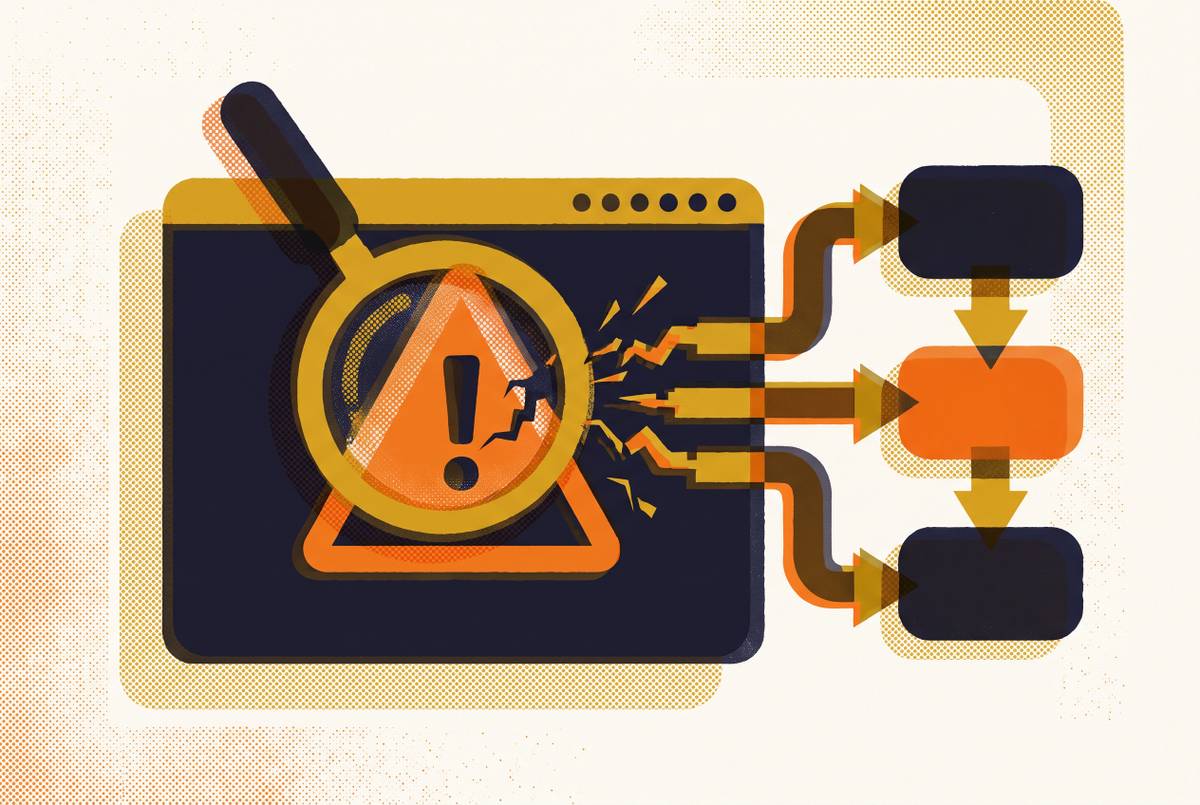
Headless Browser Detection by Anti-Bot Systems
Headless browsers dodge detection by mimicking real users.
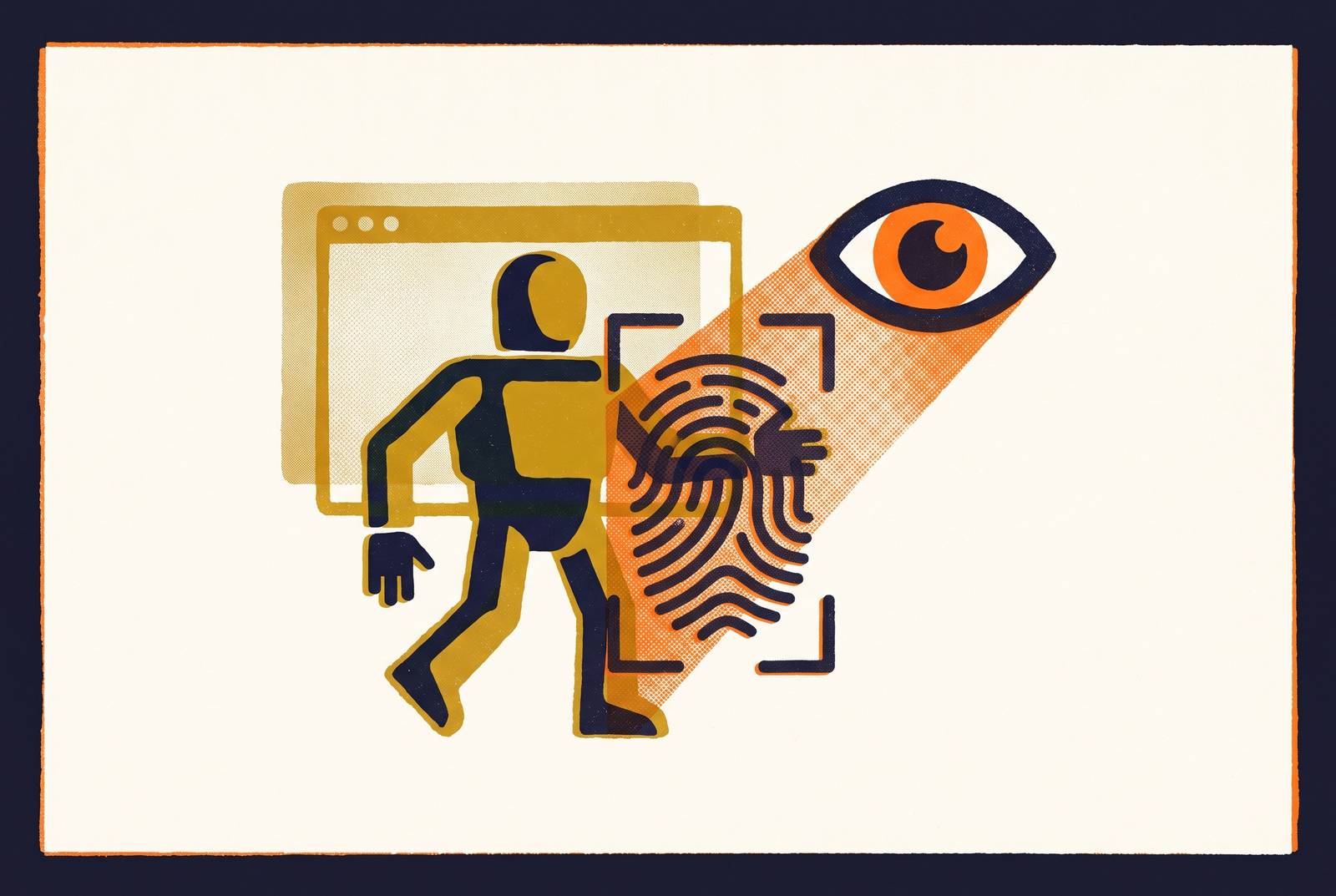
The old bots were easy to catch. A request arriving with a user-agent string reading "python-requests" and no Accept-Language header is not a person. Detection systems built blocklists, pattern-matched against telltale headers, and life was relatively manageable.
Then headless browsers arrived and that entire approach became largely obsolete.
A headless browser runs a full, real browser engine. Playwright, Puppeteer, and Selenium all operate on Chromium or Firefox or WebKit; they render HTML, execute JavaScript, manage cookies, and handle redirects exactly as a real browser does, because they are real browsers. The same HTTP headers appear. The same DOM structure gets built. The same JavaScript environment gets initialized. The signals that detection once relied on simply vanish.
The legitimate-use problem compounds everything. The infrastructure that powers credential stuffing and scalper bots is identical to what QA engineers use for automated testing, accessibility auditing, and synthetic monitoring. Anti-bot systems cannot distinguish by what the browser is; they have to distinguish by how it behaves. That is a fundamentally harder problem, and it is why evasion tooling has proliferated so openly: the frameworks are maintained publicly, documented comprehensively, and widely understood by anyone motivated to look.
The attack surface headless browsers enable is genuinely broad. Price scraping runs at scale without triggering rate limits because a headless browser paces through a site the way a user would. Credential stuffing passes JavaScript-gated login flows that would reject a raw HTTP request outright. Account creation fraud defeats CAPTCHA-adjacent checks tied to browser state. Scalper bots execute checkout flows end-to-end, including dynamic pricing logic and real-time inventory checks. And one category is more unsettling than the rest: agentic AI bots that navigate web applications autonomously, without a human guiding each step. Per HUMAN Security's 2026 State of AI Traffic report, AI bot traffic grew 187% from January to December 2025, while human traffic grew just 3.1%. TollBit found that by Q4 2025, there was roughly one AI bot visit for every 31 human visits, compared with one for every 200 in Q1 2025. That is not a rounding error.
The harms are concrete. Twenty-seven percent of bot attacks targeted APIs directly in 2025. Account takeover attacks grew 70% year-over-year; financial services absorbed nearly half of all ATO incidents. These are not abstract traffic statistics. They map to fraud losses, credential theft, and inventory manipulation at operational scale.
This is the context behind that 53% figure from the 2026 Imperva/Thales Bad Bot Report. Cloudflare's CEO put HTML-specific bot traffic at 57.5%. Those numbers measure different things, but they converge on the same side of 50%, and that convergence is exactly the point. Because headless browsers look so much like real browsers, detection had to become layered. Each layer targets a different class of signal, and understanding each one explains why this keeps escalating rather than resolving.
The First Detection Layer: JavaScript Environment Anomalies Headless Browsers Leave Behind
The most obvious tell is the navigator.webdriver property. Headless Chrome sets it to true by default. Detection systems check for it. And almost every mature evasion framework patches it to false or undefined before the page initializes. Its practical utility as a signal is now minimal; it catches naive or misconfigured bots, which still has value because cheap detection of cheap bots preserves computational resources for harder problems, but nobody building serious detection relies on this alone.
Below that surface, more durable artifacts exist. Selenium injects variables with a cdc prefix into the JavaScript context of the page it controls; anti-bot scanners look for those strings. Puppeteer communicates via Chrome DevTools Protocol, and the side effects of that connection are detectable from inside the page. Playwright uses a different protocol and does not leave the cdc markers, which is part of why it became the preferred tool for more sophisticated automation. But even Playwright leaves traces.
The deeper check involves the browser's ambient API environment. Real browsers accumulate a dense layer of objects over years of development: a populated plugins array, a working speech synthesis interface, notification permission states, battery API, Bluetooth API, dozens more. Headless environments frequently return empty arrays or undefined where a real browser would return a fully populated object. No single absent API is definitive. The pattern of several simultaneously absent or malformed is what elevates a session's risk score.
Here is where I want to be direct about what this layer actually accomplishes: all of it can be patched. A few lines of JavaScript injected before page load can override almost any of these signals. Every mature anti-detect framework does exactly that. The value of JavaScript environment checks is not catching sophisticated operators; it is filtering low-effort automation quickly, cheaply, before deeper and more expensive analysis has to run. Think of it as the first sieve, not the last.
How GPU and Canvas Rendering Exposes Headless Browsers That Have Patched Their JavaScript
When a browser renders a shape to an HTML canvas element, it does so through the GPU driver stack. Tiny rounding differences, font hinting choices, and antialiasing algorithms produce pixel-level output that varies by GPU model, driver version, and operating system. Anti-bot systems hash that output and compare it against catalogued profiles of real devices and known automation environments.
The structural problem for headless browsers is hardware. Headless Playwright and Puppeteer instances running in cloud environments without real GPU hardware default to software renderers. SwiftShader is the most common in Chromium headless builds. The WEBGLdebugrenderer_info extension, available via JavaScript, allows a detection script to query the GPU vendor and renderer strings directly. "SwiftShader" in that string is an immediate flag. "Microsoft Basic Render Driver" similarly signals a virtualized environment without a real graphics card.
The more sophisticated catch, though, is not any single string in isolation. It is the internal contradiction a patched bot creates. A user-agent claiming Chrome 120 on Windows while WebGL reports SwiftShader describes a configuration no real Windows user with Chrome 120 would have. Layer in a TLS fingerprint consistent with a headless Linux build and you have a profile that contradicts itself across three independent dimensions simultaneously. The mismatch is the signal. Detection systems score the coherence of the entire profile, not individual attributes in isolation.
Spoofing WebGL vendor strings is technically possible, but it does not solve the consistency problem; it extends it. Now the hash, the string, and the canvas pixel output all have to agree with each other and with every other signal the system is collecting. This is precisely why cloud browser services that provision actual GPU hardware became part of the serious evasion toolkit. They sidestep the problem by using real hardware rather than attempting to solve the spoofing challenge algebraically.
TLS Fingerprinting: The Detection That Happens Before Any Page Content Is Served
Before a single byte of page content is served, before any JavaScript runs, before any cookies are checked, the HTTPS handshake happens. And that handshake is observable.
Every TLS connection begins with a ClientHello message. That message contains a list of supported cipher suites, extensions, elliptic curves, and compression methods, arranged in a specific order. Different clients produce characteristically different ClientHello structures. Chrome looks different from Firefox. Firefox looks different from Python's requests library. A headless Chromium build can look different from a standard Chrome installation. Anti-bot systems capture this passively, compare it against the user-agent the client claims, and check for coherence.
The original fingerprinting standard, JA3, hashed the concatenated ClientHello fields into a single string. Around 2024, Chrome began randomizing TLS extension order to reduce its own fingerprinting surface, which made JA3 hashes unstable; the same real browser now generates many different JA3 hashes per session. JA4 was developed to handle this, using an order-independent approach that remains robust against Chrome's randomization. JA4H extends the fingerprint to the HTTP layer itself, examining header order, accept-encoding values, and HTTP version declarations.
The most reliable catch is what gets called "impossible configuration" detection. Chrome 124, running normally, defaults to HTTP/2 or HTTP/3. A session whose JA4 fingerprint indicates Chrome 124 but whose JA4H fingerprint shows HTTP/1.1 is an impossible configuration. No real Chrome 124 browser behaves that way. Python's requests library is the canonical example: it defaults to HTTP/1.1 and produces a header signature that looks nothing like a real browser, regardless of whatever user-agent string it appends to the request.
What I find genuinely underappreciated about TLS fingerprinting is its persistence across application-layer disguises. A bot can rotate IP addresses. It can swap user-agent strings on every request. But if its JA4 hash stays consistent across those rotations, the network-layer identity remains traceable. The application-layer disguise simply does not reach down far enough to change it.
Matching a real browser's TLS fingerprint requires either using the real browser's actual TLS stack or deeply modifying the automation framework's network layer. Tools exist that attempt this, but they require matching the target browser's exact cipher suite ordering and extension set, which changes with every browser version update. It is not a simple configuration change; it is ongoing maintenance against a moving target.
Behavioral Scoring: How Classifiers Catch Bots That Pass Every Static Check
Assume a bot has patched its JavaScript environment, avoided software renderer strings, and correctly spoofed its TLS fingerprint. Detection still has another layer waiting, and it is the most structurally challenging one to defeat.
Detection providers deploy JavaScript collection scripts that gather continuous behavioral data throughout a session: coordinate sequences from mouse movement, acceleration profiles from scroll events, timing intervals between clicks, keyboard event sequences. This data is not evaluated as individual events. It is processed as a time-series and fed into classifiers trained on large populations of confirmed human sessions and confirmed bot sessions.
The tells that automated tools produce are consistent once you have seen enough of them. Mouse trajectories from scripts are too straight; humans curve, overshoot, and self-correct in ways that are surprisingly difficult to replicate convincingly. Scripted typing has almost no variance in speed; human typing has natural jitter built in from the irregular mechanics of actual fingers on actual keys. Bots navigate on a consistent timer, hitting the next element in the same interval across requests, while human attention wanders. Scroll acceleration in scripts traces a clean mathematical curve; human scrolling follows impulse, not calculus.
AI agents complicate this, and not in a trivial way. Research published in 2025 evaluating behavioral fingerprinting against AI browsing agents found that behavioral analysis detected all seven agents tested. But that same research acknowledged that future agents will develop more human-like behavioral patterns. This is an active problem, not a closed one, and anyone telling you otherwise is selling something.
Modern anti-bot systems do not issue a binary pass or fail on any individual signal. They aggregate across a large number of signals to produce a confidence score. This architecture removes the concept of a single flag to flip or header to fake. A bot has to present a coherent, consistent profile across every layer simultaneously, and the detection paradigm is probabilistic: does this session, taken whole, look more like a human or a bot?
The Evasion Ecosystem That Has Grown Up Around Each Detection Layer
Every detection layer described above has a corresponding evasion response, and that correspondence is not accidental. It is the predictable result of a market where the tooling is open, the documentation is public, and the financial incentive for successful evasion is substantial.
Anti-detect frameworks are modified wrappers around standard automation libraries. They patch browser APIs to fill in the absent objects that detection looks for. They manipulate fingerprinting surfaces to return plausible, internally consistent values. The more sophisticated ones manage consistency across signals, ensuring that the user-agent, the canvas hash, the WebGL strings, and the plugin array all tell the same coherent story about a device that plausibly exists somewhere in the world.
At the infrastructure level, the evasion toolkit has expanded accordingly. Residential proxy networks route automation traffic through real consumer IP addresses, defeating IP reputation checks. Cloud browser services, some with real GPU hardware, address the software renderer problem at its source rather than attempting to paper over it. Browser profile management tools maintain persistent, realistic browsing histories and cookie jars to defeat behavioral novelty checks that flag sessions with no prior state.
The cadence of this escalation follows detection releases closely. When a new fingerprinting method becomes publicly documented, evasion patches appear quickly. When detection providers publish research on a specific tell, the anti-detect community patches for it within a recognizable timeframe. I have watched this cycle repeat enough times to stop finding it surprising. It is not a problem that resolves; it is a competitive market that clears and then resets.
No single detection layer is sufficient, and none of them are secrets. The efficacy of modern anti-bot systems comes entirely from the requirement that a bot present a coherent profile across all layers simultaneously. Patching JavaScript is achievable. Spoofing WebGL strings is achievable. Matching a TLS fingerprint is achievable. Generating believable behavioral signals is achievable. Doing all of them, consistently, in a way that introduces no internal contradictions across signals, is where the combinatorial complexity becomes the actual barrier. The defenders add signals. The attackers patch for them. The cost of entry for evasion rises, but so does the sophistication of what gets built to evade.
There is no resolution at the end of this story, at least not yet.