Headless Browser Testing for Single-Page Applications
Async timing problems make SPA testing uniquely flaky and harder than traditional web apps.
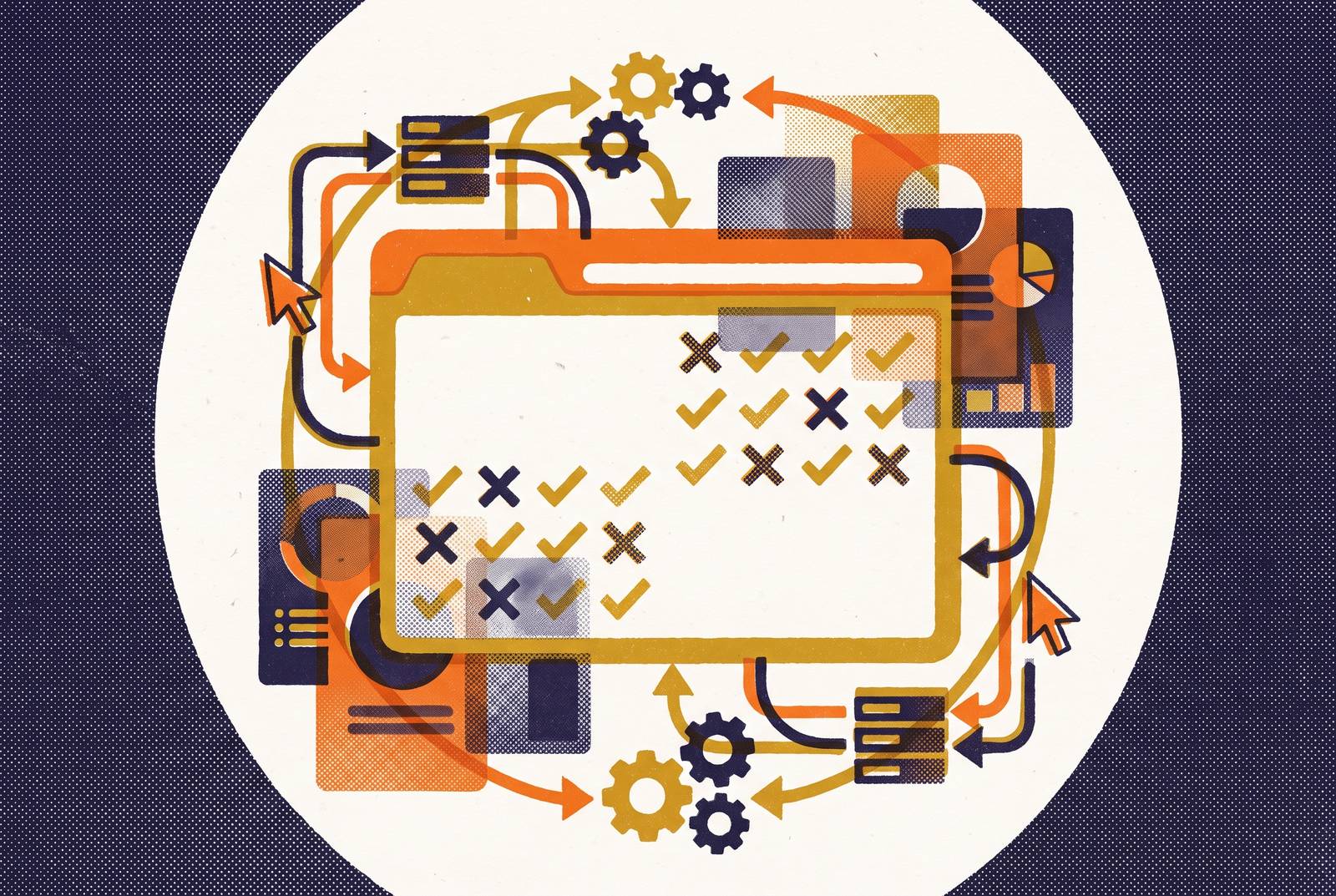
The core difficulty is that SPAs produce a moving target. In a traditional multi-page application, each request returns a complete HTML document. The page is the response. In a SPA, the page is a consequence of JavaScript execution, and that execution is ongoing. Elements appear and disappear based on network calls, user interactions, and state transitions that happen at unpredictable intervals after initial load. You cannot snapshot your way out of that.
State management compounds this in ways that aren't always obvious until you're already three hours into debugging a test that fails twice a week. The same URL can produce fundamentally different DOMs depending on what the user did before arriving there, what data was fetched, and what the client-side store currently holds. There is no canonical snapshot of what a given route looks like. Test setup becomes genuinely difficult, and assertions against DOM structure are hard to keep stable over time.
Client-side routing introduces a subtler problem that most teams underestimate until they've already paid for it. Hard navigations, the kind where the browser requests a new document from the server, reset everything. Soft navigations, where a SPA updates content and rewrites the URL without a full reload, do not. Most testing and performance tooling was built for the former. Soft navigations are effectively invisible to those tools. Google ran an origin trial in 2024 toward standardizing soft-navigation measurement, but no universal standard exists yet, so your toolchain is unlikely to save you here.
The practical consequence of all of this is flakiness. Not random noise, but concentrated instability in exactly the patterns SPAs rely on most. Research analyzing fixes across 51 Apache projects, published by Luo et al. at FSE 2014, found that 45% of flaky test fixes addressed async timing issues, the single largest category by a significant margin. Atlassian documented more than 150,000 developer hours per year lost to flakiness. Slack Engineering reported their main branch had only a 20% pass rate before they implemented automated flaky-test handling. An SD Times analysis of Bitrise data found the proportion of teams experiencing flaky tests grew from 10% to 26% between early 2022 and mid-2025.
That last number deserves some skepticism about causation, honestly. Flaky tests aren't new, and counting them is imprecise. But the directional story matches what teams actually report: as SPA architectures have proliferated, so has the async timing problem that drives most flakiness. The numbers roughly corroborate a trend that engineers have been complaining about for years.
These are not bugs in the testing tools. They are structural features of the SPA model, which is precisely why tool choice and technique matter as much as they do.
How the Headless Browser Tooling Landscape Has Shifted Toward SPA-Native Approaches
The older generation of tools was not built for this problem. Selenium remains the most widely installed test framework by repository count, with more than 354,000 repositories depending on it, and it has served as the enterprise default for decades. But its explicit-wait model means async timing is entirely the developer's responsibility. Every wait condition must be authored manually. In a SPA where state transitions are constant and varied, that is a structural mismatch, and it generates maintenance overhead proportional to the complexity of the app. Selenium works. It's just a manual transmission in a world that has largely moved on.
Puppeteer is a lower-level Node.js automation library built by Google for headless Chrome. It is not a full testing framework. There are no built-in assertions or test runners, and its Chromium-only scope limits usefulness for cross-browser coverage. Useful as a building block, not as an answer.
Cypress represented the first serious attempt to address SPA-specific pain directly. It built automatic waiting into its command model and added video recording during headless runs, both of which are direct responses to the flakiness and debugging problems described above. More than 4 million weekly npm downloads and 46,000 GitHub stars reflect genuine adoption, and it earned that adoption. The remaining structural limits are real, though: WebKit and Safari support is experimental, multi-tab and multi-origin scenarios are difficult, and native parallel execution requires the paid Cloud service.
Playwright is where momentum is concentrated now, and the trajectory is hard to argue with. Built by Microsoft and explicitly designed for modern web apps with dynamic content, it supports Chromium, Firefox, and WebKit within a single framework. Weekly npm downloads grew from under 500,000 in early 2021 to over 35 million in February 2026. The State of JS 2024 reported a 94% retention rate, the highest of any E2E testing tool. By State of JS 2025, developer satisfaction sat around 91% for Playwright versus roughly 72% for Cypress.
Two other tools occupy specific niches worth knowing. TestCafe requires no browser driver installation and includes a built-in parallel runner, which appeals to teams that want minimal setup overhead. WebdriverIO is a configurable Node.js framework on the WebDriver protocol with headless mode support that meaningfully reduces test time compared to headed runs. Neither is capturing the same growth trajectory as Playwright, but both serve specific organizational constraints well.
The tools gaining ground are the ones that handle async timing automatically rather than delegating that complexity to the test author. That's the throughline. Everything else is secondary.
Where Headless E2E Testing Fits Alongside Unit and Integration Tests for SPAs
SPAs have a distinct lower layer of testing that should not be conflated with E2E. Component logic, state transformations, and isolated rendering can all be verified without spinning up a browser. This is faster, cheaper to run, and easier to debug when something breaks. It should be the first line of defense for unit-level concerns.
Jest, maintained by Meta, remains the most widely used JavaScript test runner at this layer. The State of JS 2024 reported more than 7,000 respondents actively using it, more than any other testing tool. Vitest has grown more than 400% since 2023 and ranked highest in developer satisfaction in that same survey. For greenfield projects, Vitest is the clear momentum choice; teams that switch rarely find a reason to go back.
The developer experience at this layer has friction that doesn't go away just because you pick the right tool. State of JS 2025 found respondents averaging 4.4 testing tools in use simultaneously, which reflects the reality that no single tool covers every need. Mocking was the top pain point, with configuration and setup close behind. Anyone who has maintained a large JavaScript test suite for a few years could have told you that without a survey.
The recommended stack from State of JS 2025 data for new projects is Vitest for unit and integration tests, Testing Library for component assertions, and Playwright for E2E. That combination covers the full range without redundancy. It's a reasonable starting point, though the right answer for any given team depends on what they're already maintaining.
The critical distinction for everything that follows: unit tests verify logic in isolation. Headless E2E tests verify what a real user encounters, which includes rendered state, network-dependent content, and routing behavior. For SPAs, only E2E tests can surface the full class of failures that matter at runtime. Both layers are necessary. They answer different questions, and conflating them is how teams end up with either a false sense of security or an unmaintainable suite. Think of unit tests as checking whether each instrument in an orchestra is in tune, and E2E tests as listening to whether the whole performance actually sounds right — you need both, because a collection of perfectly tuned instruments can still play the wrong song.
Handling Async Timing Without Making Tests Brittle or Slow
Most SPA test flakiness originates from a single root cause: tests that proceed based on elapsed time rather than actual application state. Fixed sleeps are the canonical example, and they fail in both directions. Too short on a slow CI runner and the app hasn't finished yet. Too long on a fast local run and the test wastes seconds waiting for a condition that was already true. The sleep knows nothing about the state transition that actually matters. It is structurally disconnected from the UI. Relying on fixed sleeps to manage async timing is like setting an alarm for "sometime tomorrow morning" and hoping for the best.
Auto-waiting is the correct model. Playwright, before interacting with any element, verifies that the element is stable, visible, and enabled. This covers the vast majority of timing concerns without any explicit wait statements from the test author. Here's the part that surprises people: adding manual wait statements on top of Playwright's auto-waiting can actively cause failures by introducing unnecessary delays or conflicting with the built-in mechanism. A team adds more waits because tests are flaky, the waits make things worse, and now the root cause is buried under a pile of attempted fixes. The instinct to add waits is almost reflexive, and it's almost always wrong.
There are still cases where explicit waits are warranted. Waiting for a specific network response to complete, waiting for a URL change after client-side navigation, or waiting for an element count to stabilize are all application-specific conditions that cannot be inferred from DOM readiness alone. Playwright's API provides mechanisms for each. The key distinction is that explicit waits should describe a condition the application must reach, not a duration the test must endure.
Using Network Interception to Make SPA Tests Deterministic
External dependencies are where SPA test reliability goes to die. Rate limits, backend instability, data that changes between runs, third-party outages: any of these can fail tests that have nothing to do with application code. The test suite becomes a barometer for the entire dependency graph rather than a meaningful signal about the application itself.
Playwright's network interception API addresses this at the browser level. The page.route() and browserContext.route() methods intercept, modify, or mock HTTP requests natively, without a proxy. page.routeWebSocket() extends this to WebSocket communication, which matters for SPAs that depend on real-time data feeds. Beyond mocking responses, the same API can simulate slow connections to test loading states, block analytics or ad calls that would otherwise slow down test runs, and inspect traffic for debugging.
The tradeoff is real and worth being honest about. Mocked tests do not catch actual API contract changes. A passing mocked test can coexist with a broken integration, and that's a genuinely bad place to discover you have a problem, usually in production. This is a reason to be deliberate about where mocking ends and real integration testing begins, not a reason to avoid mocking.
The approach that resolves this is layered. Mock most API calls in the main E2E suite to achieve speed and determinism across the bulk of test runs. Maintain a small set of smoke tests that hit real endpoints before every release. The mocked suite gives continuous feedback. The smoke tests give confidence before production. Neither layer makes the other redundant.
Writing Selectors and Test Structure That Survive SPA Changes
SPA UIs are particularly hostile to naive selector strategies. CSS-in-JS libraries and component frameworks frequently produce auto-generated class names that change across builds. Dynamic IDs generated at render time are similarly unreliable. Text-content selectors break whenever copy changes. Any selector strategy that depends on implementation details rather than intent will fail at a rate proportional to how actively the application is being developed.
The stable approach is data-testid attributes, or similar purpose-built data attributes, applied by developers at the component level. These are decoupled from visual styling and build-time generation. They survive refactors that change class names and redesigns that change visual structure. More importantly, they signal intent: a data-testid communicates that an element is part of the tested interface contract. This requires a team agreement to treat test attributes as first-class concerns rather than afterthoughts. Teams that skip this agreement tend to arrive at it eventually, after enough broken builds and enough pointed conversations about whose fault it was.
Test structure should be organized around user journeys, not implementation details. Client-side routing means a "page" is a logical concept, not a document load. Tests should reflect what the user is trying to accomplish: log in, complete a checkout, submit a form, navigate to a dashboard. Grouping by route or feature rather than by component makes suites easier to understand and easier to maintain as the application evolves.
State isolation is non-negotiable. Each test must begin from a known application state, not inherit state from a prior test. SPAs are particularly susceptible to this problem because state persists in memory between interactions. A test that passes in isolation but fails in sequence is not a passing test. It is a deferred failure, and deferred failures have a way of surfacing at the worst possible moment.
Running Headless SPA Tests in CI/CD Pipelines
Headless mode is the appropriate default for CI. It requires no display server, carries lower resource overhead, and behaves consistently across environments. Playwright runs headless by default, which means the CI configuration reflects the tool's design intent rather than working against it.
Parallel execution is where the operational efficiency of modern tooling becomes most apparent. SPA E2E suites grow quickly. Every route and user flow needs coverage, and the suite expands with the application. Playwright's native sharding and parallel browser contexts allow suites to scale without proportional time cost. This is available without a paid service, a meaningful distinction from Cypress, where parallel execution requires the paid Cloud offering.
Browser context isolation is the mechanism that makes parallelism safe. Each test gets its own browser context with independent cookies, storage, and authentication state. Cross-test state leakage is eliminated without the overhead of spinning up a full browser instance per test.
Artifact collection on failure is worth configuring explicitly. Screenshots and video on failure are available in both Playwright and Cypress. Playwright's trace viewer goes further: it captures DOM snapshots, network activity, and console logs in a format that can be inspected after the fact without re-running the test locally. For debugging failures in CI environments where you can't sit at the machine and watch, this is not a minor convenience. It is the difference between a two-minute investigation and a two-hour one.
Retry-on-failure deserves a note of caution. It is a useful mechanism for absorbing genuine transience, but overuse masks real bugs. A retry that produces a passing result is a deferred investigation, not a resolution. Quarantine patterns, where known-flaky tests are isolated from the main blocking suite, allow investigation to proceed without holding releases hostage to unresolved instability. The goal is to identify and address the root cause. Retrying until something turns green is a way of lying to yourself about the health of the suite, and it catches up with you eventually.